
An easy, practical guide for builders, contractors, site engineers, and homeowners in India
Introduction: "Why Is Binding Wire So Important on Site?"
Almost every construction site uses binding wire—but very few buyers actually understand which binding wire to choose, what size is right, or why quality matters.
Many site issues like:
- Loose reinforcement
- Poor slab alignment
- Extra labour time
- Frequent wire breakage
…can be traced back to low-quality or wrong-size binding wire.
This guide explains what binding wire is, how it's used, available sizes and grades, and how to choose the right binding wire—in simple, practical language that works for Indian construction sites.
What Is Binding Wire?
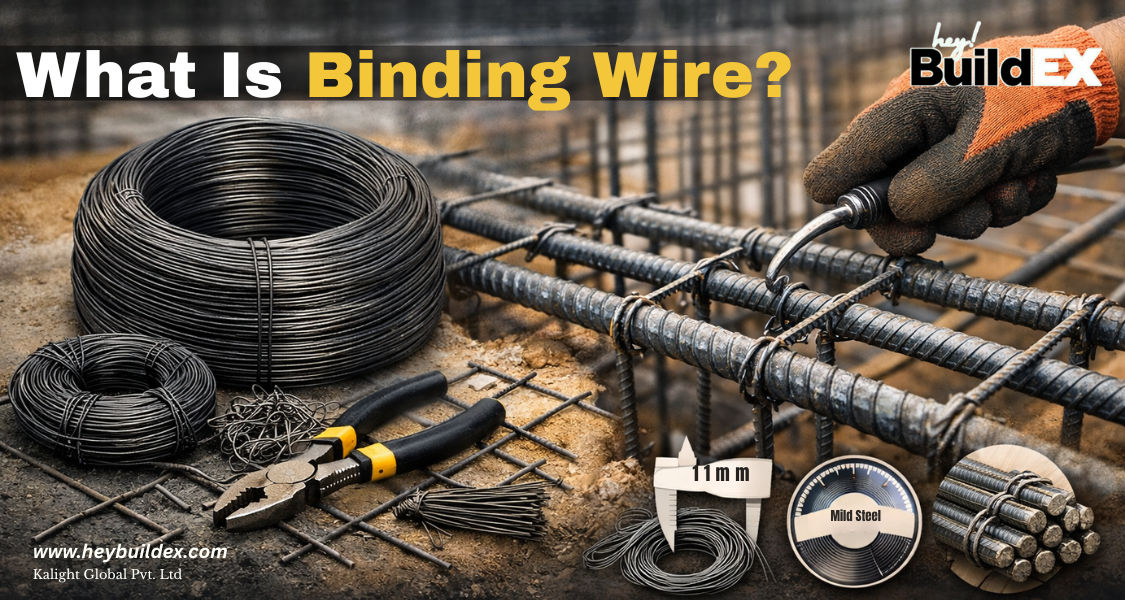
Binding wire is a thin, flexible steel wire used to tie reinforcement bars (TMT steel) together before concreting. Its main role is to hold steel bars firmly in position so they don't move during concreting or vibration.
In simple terms:
Binding wire keeps the steel skeleton of a structure stable until concrete hardens.
Without proper binding wire:
- Steel bars can shift
- Concrete cover may reduce
- Structural strength can be affected
That's why binding wire, though low-cost, plays a critical role in construction quality.
Why Binding Wire Is Important in Construction
Binding wire helps in:
- Maintaining correct spacing between rebars
- Holding joints, laps, and intersections securely
- Speeding up reinforcement work
- Reducing chances of rework or steel displacement
Even though it doesn't directly carry load, binding wire ensures reinforcement accuracy, which directly affects slab, beam, and column strength.
How Binding Wire Is Manufactured (Brief Overview)
Binding wire is usually made from low-carbon mild steel through the following steps:
- Steel rod drawing – MS rods are drawn into thin wires
- Annealing process – wire is heated and slowly cooled
- Softening & flexibility – annealing makes the wire easy to bend
Why annealing matters:
- Makes the wire soft and flexible
- Prevents breakage during tying
- Improves tying speed and finish
👉 Most construction Binding wire in India is annealed binding wire.
Common Binding Wire Sizes Used in India
Binding wire is commonly specified in SWG (Standard Wire Gauge) or diameter (mm).
Popular Binding Wire Sizes (Table)
| SWG Size | Approx. Diameter | Common Use |
|---|---|---|
| 16 SWG | ~1.6 mm | Heavy reinforcement, foundations |
| 18 SWG | ~1.2 mm | Slabs, beams, columns (most common) |
| 20 SWG | ~0.9 mm | Light tying, fabrication |
| 22 SWG | ~0.7 mm | Temporary or light-duty use |
✅ 18 SWG binding wire is the most widely used size for RCC work in India.
Binding Wire Grades & Material Types
- Annealed Mild Steel Binding Wire
- Most commonly used
- Soft, flexible, easy to tie
- Ideal for RCC reinforcement
- Galvanized Binding Wire
- Zinc-coated
- Better corrosion resistance
- Used in coastal or exposed environments
- PVC-Coated Binding Wire
- Plastic-coated
- Used for fencing or non-structural work
- Not common for RCC reinforcement
👉 For normal construction, annealed MS binding wire is preferred.
Binding Wire Weight, Length & Packaging
Binding wire is usually sold by weight, not by length.
Typical Packaging:
- 1 kg coils
- 10 kg bundles
- 25 kg rolls
- 50 kg rolls (bulk projects)
Approximate Length per Kg (18 SWG)
| Wire Size | Approx. Length per Kg |
|---|---|
| 16 SWG | 50–55 meters |
| 18 SWG | 90–100 meters |
| 20 SWG | 150–160 meters |
⚠️ Length may vary depending on manufacturer and annealing quality.
Uses of Binding Wire in Construction
- RCC Reinforcement Work
- Tying TMT bars in slabs, beams, columns, footings
- Holding stirrups and laps in place
- Precast & Infrastructure Projects
- Reinforcement cages
- Foundation structures
- Retaining walls
- Fabrication & Industrial Uses
- Temporary tying
- Mesh fixing
- Light fabrication jobs
- Fencing & Temporary Works
- Fixing chain-link mesh
- Site barricading
- Temporary supports
Advantages of Good-Quality Binding Wire
Using good binding wire offers:
- Faster tying speed
- Less wire breakage
- Better steel alignment
- Reduced labour fatigue
- Cleaner reinforcement work
Cheap or brittle wire causes:
- Frequent snapping
- Slow progress
- Extra labour cost
- Poor site finish
How to Choose the Right Binding Wire for Your Project
Choose Based On:
- Type of construction
- Residential slab → 18 SWG annealed
- Heavy foundation → 16 SWG
- Light work → 20 SWG
- Environment
- Normal conditions → Annealed MS wire
- Coastal / humid → Galvanized wire
- Labour preference
- Softer wire = faster tying
- Hard wire increases fatigue
- Quantity required
- Small site → 10–25 kg
- Large project → 50 kg rolls or bulk supply
Common Mistakes Buyers Make
- Buying the cheapest wire without checking flexibility
- Ignoring wire gauge (too thin or too thick)
- Using hard-drawn wire instead of annealed wire
- Underestimating quantity needed
- Buying from unreliable local traders
These mistakes often increase overall project cost, not reduce it.
Buyer Checklist: Before Purchasing Binding Wire
- Correct SWG size
- Proper annealing (soft & flexible)
- Uniform thickness
- Rust-free surface
- Reliable weight per roll
- Trusted supplier
Why Choosing the Right Supplier Matters
Even for low-cost items like binding wire, supplier reliability matters:
- Correct weight delivery
- Consistent quality
- Availability during peak site work
- Transparent pricing
A dependable supplier ensures you don't face last-minute shortages during slab casting.
Binding Wire Supply with HeyBuildEX
HeyBuildEX is a trusted construction materials supplier supporting builders, contractors, and site engineers with quality construction steel, cement, and essential accessories like binding wire. HeyBuildEX focuses on reliable sourcing, transparent pricing, and consistent availability, helping customers manage site requirements smoothly.
New HeyBuildEX Steel Yard at Anandapuram
The new steel yard at Anandapuram strengthens material availability for projects in Vizag and nearby regions. With organised stock storage, quicker loading, and easier access, the Anandapuram yard ensures faster dispatch of steel products and accessories like binding wire, reducing site delays and improving procurement efficiency for ongoing construction work.
Final Thoughts
Binding wire may seem like a small component, but it plays a big role in construction quality and site efficiency. Choosing the right size, grade, and supplier ensures:
- Faster reinforcement work
- Better steel alignment
- Reduced labour issues
- Smooth concreting operations
Instead of treating binding wire as a minor purchase, approach it with the same care as other construction materials. For hassle-free procurement and consistent supply, working with a trusted supplier like HeyBuildEX helps keep your project on track—right from the foundation stage.
FAQs – People Also Ask
1. What is binding wire used for?
Binding wire is used to tie reinforcement bars together before concreting.
2. Which binding wire size is best for slabs?
18 SWG annealed binding wire is most commonly used for slabs.
3. How much binding wire is required per ton of steel?
On average, 8–12 kg of binding wire per ton of TMT steel is required.
4. Is galvanized binding wire better than annealed wire?
Galvanized wire is better for corrosion resistance, but annealed wire is preferred for RCC work.
5. Can binding wire affect structural strength?
Indirectly, yes. Poor binding can lead to steel displacement, affecting concrete cover and alignment.
6. How do I check binding wire quality on site?
Check flexibility, uniform thickness, and ensure it doesn't snap easily while tying.