
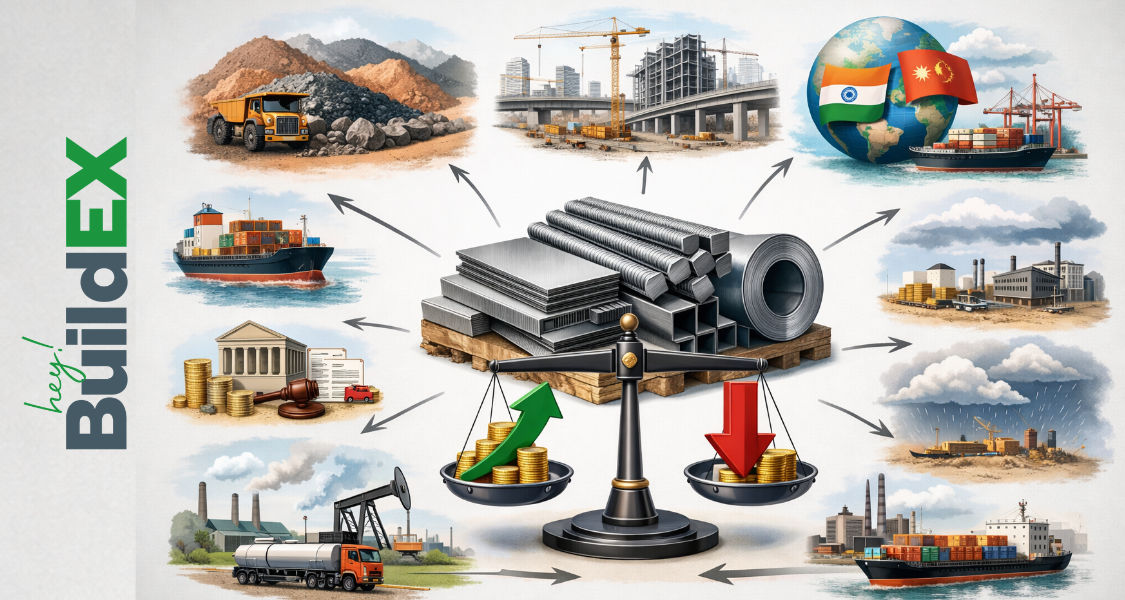
Steel plays a crucial role in our daily lives. From the house we live in to the bridges we cross, from railway tracks to cars, steel is everywhere. In India, especially in the construction sector, steel rates directly affect builders, contractors, real estate developers, and even individual homeowners. But many people often wonder: Why does the price of steel keep changing?
Let’s break it down in simple terms so anyone can understand what really drives steel prices up or down in the Indian market.
Raw Material Prices
Steel is not made out of thin air. It is produced mainly using:
- Iron ore
- Coking coal
- Scrap metal
India is one of the largest producers of iron ore, but we still import a large portion of coking coal from countries like Australia. If the price of iron ore or imported coal increases, the cost of producing steel automatically goes up.
For example:
- If global coal prices rise due to supply issues,
- Or if iron ore production drops due to mining restrictions,
Steel manufacturers will increase their selling price to maintain profit margins. When raw material prices fall, steel rates usually decrease as well.
Demand and Supply in the Market
Like any other product, steel prices are strongly influenced by demand and supply.
When Demand Increases:
- Government announces large infrastructure projects
- Real estate construction activity rises
- More highways, bridges, and metro projects start
When demand is high and supply is limited, prices go up.
When Demand Decreases:
- Construction slows down
- Real estate sales decline
- Government reduces infrastructure spending
If steel production remains high but demand falls, companies reduce prices to clear stock. In India, demand often increases during peak construction seasons (usually after monsoon).
Government Policies and Taxes
Government decisions have a direct impact on steel prices.
Important factors include:
- Import duties
- Export duties
- GST rates
- Mining regulations
- Environmental norms
For example:
- If the Indian government increases export duty on steel, manufacturers may sell more steel domestically, increasing supply and stabilizing prices.
- On the other hand, if import duties are increased, imported steel becomes expensive, which may push local prices upward.
Government budget announcements and policy changes can create short-term price fluctuations in the market.
International Market Trends
Steel is a globally traded commodity. What happens in other countries affects Indian steel prices too.
For instance:
- If global demand increases (especially from large economies),
- If international prices rise sharply,
Indian manufacturers may increase domestic prices to match global rates. Countries like China play a major role in global steel pricing because they are among the largest producers and consumers of steel. When production changes in China, the ripple effect is felt across global markets, including India.
Fuel and Transportation Costs
Steel is heavy and expensive to transport. From factory to warehouse to construction site, transportation is a major cost.
If:
- Diesel prices increase,
- Railway freight charges increase,
- Port handling charges rise,
The overall landed cost of steel increases. When fuel prices are stable or lower, transportation becomes cheaper, helping to keep steel rates under control.
Inflation and Economic Conditions
General economic health also affects steel prices.
During periods of high inflation:
- Production costs rise
- Labor costs increase
- Energy bills go up
All these factors increase steel manufacturing expenses.
In contrast, during economic slowdowns:
- Construction slows
- Industrial demand decreases
- Builders delay projects
Lower demand may push steel prices down. India’s GDP growth and overall economic momentum play a big role in determining steel consumption.
Seasonal Factors (Monsoon Impact)
In India, monsoon has a strong impact on construction activity.
During heavy rains:
- Construction work slows down
- Demand for TMT bars and structural steel drops
As a result, steel prices may soften during peak monsoon months.
After monsoon:
- Construction resumes
- Demand rises sharply
This often causes prices to increase again.
Production Capacity and Plant Shutdowns
If major steel plants reduce production due to:
- Maintenance shutdowns
- Power shortages
- Environmental restrictions
- Raw material shortages
Supply becomes tight, and prices increase. On the other hand, if multiple plants operate at full capacity and produce excess steel, prices may drop due to oversupply. Large Indian steel companies such as Tata Steel, Steel Authority of India Limited (SAIL), Vizag Steel (RINL) and JSW Steel significantly influence domestic pricing trends because of their production scale.
Export and Import Trends
India both exports and imports steel.
If:
- International prices are higher than Indian prices, manufacturers prefer exporting.
- Domestic supply reduces due to exports.
This can push local prices upward.
But if:
- Global demand slows
- Export orders reduce
Then more steel is sold within India, increasing supply and possibly lowering prices.
Speculation and Market Sentiment
Sometimes prices move based on market expectations.
For example:
- If traders expect government infrastructure announcements,
- If they predict raw material shortages,
- Or anticipate higher global demand,
They may increase prices even before actual shortages happen. This psychological factor also plays a role in short-term price volatility.
Energy Costs
Steel production requires massive electricity and fuel consumption. If power tariffs increase or coal supply to power plants becomes expensive, production costs rise. Energy is one of the biggest components of steel manufacturing. So fluctuations in energy markets directly affect steel rates.
Currency Exchange Rate
Since India imports coal and certain raw materials, the value of the Indian Rupee matters.
If the rupee weakens against the US dollar:
- Imports become expensive
- Raw material costs increase
- Steel prices may rise
If the rupee strengthens:
- Import costs reduce
- Steel prices may stabilize
Why Steel Prices Fluctuate Frequently
Steel prices are not controlled by just one factor. It is a combination of:
- Raw material costs
- Demand and supply
- Government policies
- Global market trends
- Fuel and transport costs
- Economic conditions
When multiple factors increase costs at the same time, prices rise sharply. When demand falls and supply is high, prices decline. That is why steel rates may change weekly or even daily in the Indian market.
Final Thoughts
For a common buyer, it may seem confusing when tmt steel prices go up or down. But if you understand the main drivers — raw materials, demand, government decisions, global influence, fuel costs, and seasonal changes — the price movement becomes easier to understand.
In simple terms:
High demand + High production cost = Higher steel price
Low demand + High supply = Lower steel price
India’s growing infrastructure, housing demand, and industrial expansion mean that steel will always remain a dynamic and price-sensitive commodity. If you are planning construction, it is always wise to monitor market trends, track seasonal patterns, and purchase strategically instead of waiting blindly for prices to fall. Understanding these factors helps you make smarter buying decisions in the ever-changing steel market.
FAQs
1.Why does the steel price change frequently in India?
Steel prices change due to raw material costs, demand and supply, government policies, fuel prices, and global market trends. Since these factors keep changing, steel rates also fluctuate regularly.
2.What is the main reason for steel price increase?
The biggest reason is the rise in raw material prices like iron ore and coal. If production costs increase, manufacturers raise steel prices to maintain their margins.
3.Does monsoon affect steel prices?
Yes. During monsoon, construction activity slows down, which reduces demand. This can sometimes lead to a slight drop in prices. After monsoon, demand increases again and prices may rise.
4.How does government policy impact steel rates?
Government decisions on import duty, export duty, GST, and mining rules directly affect steel prices. Any major policy change can cause prices to increase or decrease quickly.
5.Do international markets affect Indian steel prices?
Yes. Steel is traded globally. If international prices rise, Indian manufacturers may increase domestic prices. Countries like China strongly influence global steel rates.
6.Why do fuel prices impact steel cost?
Steel transportation depends heavily on diesel and freight charges. When fuel prices increase, transportation costs rise, and this adds to the final steel price.
7.Is it better to buy steel when prices are low?
Yes, if you have confirmed construction plans. Buying during price dips can help save money. However, waiting too long for further drops can be risky because prices can rise suddenly.
8.Does infrastructure development increase steel prices?
Absolutely. When the government announces highways, bridges, metros, and housing projects, steel demand increases, which often pushes prices upward.
9.Why are steel prices different in different cities?
Prices vary due to transportation costs, local demand, warehouse availability, and regional taxes. Steel may be slightly cheaper near manufacturing plants compared to distant cities.
10.Will steel prices continue to fluctuate in the future?
Yes. Since steel depends on many dynamic factors like global demand, raw materials, fuel costs, and economic growth, price fluctuations are normal and expected.