
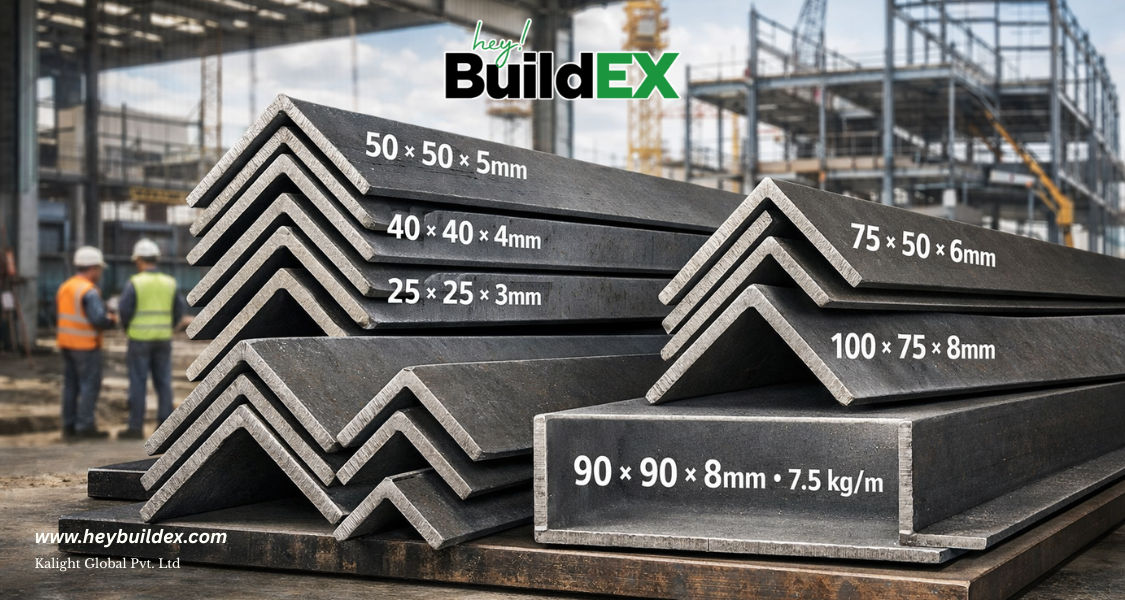
Introduction
Whether you are building a residential home, setting up an industrial shed, or working on a large infrastructure project, MS angles (Mild Steel Angles) are one of the most essential structural steel components you will use. From simple roof supports to complex fabrication frameworks, MS angles are everywhere in modern construction.
But here is the challenge — choosing the wrong size or weight of an MS angle can lead to structural failures, cost overruns, and project delays. This complete buyer guide is designed to help contractors, builders, engineers, and procurement teams make the right decision when sourcing MS angles for any application.
In this guide, you will find detailed information on standard MS angle sizes available in India, an MS angle weight chart per meter, key applications, and practical tips to help you buy smarter.
What Are MS Angles?
MS angles, also known as mild steel angles, L angle steel, or angle section steel, are L-shaped structural steel sections used extensively in construction and fabrication. They are manufactured by rolling mild steel into an L-profile with two legs meeting at a right angle (90 degrees).
Mild steel, the base material, is a low-carbon steel alloy that is easy to weld, cut, and shape — making it one of the most widely used construction steel materials in the world. MS angles are available in a range of sizes and thicknesses, making them adaptable to light, medium, and heavy structural applications.
Equal Angles vs Unequal Angles
Equal Angles: Both legs of the angle are the same length (e.g., 50x50 mm, 100x100 mm). These are the most commonly used type in general construction and fabrication. They provide uniform strength in both directions.
Unequal Angles: The two legs have different lengths (e.g., 100x75 mm, 150x75 mm). These are used when one direction needs more support than the other, commonly seen in heavy-duty structural metal frameworks, crane beams, and bridge components.
Types of MS Angles
Equal Angles
Equal leg angles are standard in most construction and fabrication projects. They are easy to source from any MS angles supplier in Visakhapatnam or structural steel angles supplier in Hyderabad. Typical uses include:
- Building frames and columns
- Roof trusses and purlins
- Industrial sheds and warehouses
- Gates, fencing, and grills
- Light machinery supports
Unequal Angles
Unequal leg angles are preferred for specialized engineering applications where asymmetric load distribution is required. Common applications include:
- Bridge construction and heavy beams
- Crane rails and industrial gantries
- Structural metal reinforcement in large buildings
- Marine and offshore structures
Standard MS Angle Sizes in India
In India, MS angles are manufactured and supplied as per BIS standards (IS: 2062 and IS: 808). The sizes range from small 20x20 mm sections for light work to heavy 200x200 mm sections for major infrastructure.
Here is an overview of common size ranges:
- Small Sizes (25x25 mm to 50x50 mm): Light fabrication, brackets, shelving supports, and decorative metalwork.
- Medium Sizes (50x50 mm to 100x100 mm): Roof structures, building frames, industrial platforms, and machinery bases.
- Large Sizes (100x100 mm to 200x200 mm): Heavy industrial sheds, transmission towers, bridges, and large structural frameworks.
Thickness variations typically range from 3 mm (for light-duty) up to 20 mm (for heavy-duty industrial use). Always match both size and thickness to the load requirements of your project.
MS Angle Weight Chart (Per Meter) — Equal Angles
The weight of an MS angle is critical for three reasons: accurate cost calculation, understanding load-bearing capacity, and planning transportation logistics. Below is a standard MS angle weight chart for common sizes available in India.
| Size (mm) | Thickness (mm) | Weight (kg/m) | Common Use |
|---|---|---|---|
| 25 x 25 | 3 | 1.11 | Light fabrication, brackets |
| 35 x 35 | 5 | 2.17 | Small frames, supports |
| 40 x 40 | 5 | 2.97 | Industrial racks, shelving |
| 50 x 50 | 5 | 3.77 | Roof trusses, light structures |
| 50 x 50 | 6 | 4.47 | Gates, fencing, supports |
| 65 x 65 | 6 | 5.84 | Floor supports, platforms |
| 75 x 75 | 6 | 6.84 | Medium structural frames |
| 75 x 75 | 8 | 8.96 | Heavy machinery support |
| 90 x 90 | 8 | 10.90 | Industrial sheds, heavy frames |
| 100 x 100 | 8 | 12.10 | Building construction |
| 100 x 100 | 10 | 14.90 | Heavy structures, bridges |
| 150 x 150 | 10 | 22.90 | Large industrial projects |
| 200 x 200 | 16 | 48.50 | Heavy-duty transmission towers |
Note: Weights are approximate and based on IS 808 standards. Always confirm with your supplier for exact specifications.
Unequal MS Angle — Sample Weight Chart
| Size (mm) | Thickness (mm) | Weight (kg/m) |
|---|---|---|
| 65 x 45 | 6 | 5.05 |
| 75 x 50 | 6 | 5.65 |
| 100 x 75 | 8 | 10.00 |
| 125 x 75 | 8 | 11.90 |
| 150 x 75 | 10 | 16.80 |
| 200 x 100 | 10 | 23.00 |
Why weight matters for buyers:
- Cost Calculation: Steel is priced per kilogram or per metric tonne. Knowing the weight per meter helps you estimate total material cost accurately.
- Load-Bearing Capacity: Heavier sections have higher moment of inertia and can carry more load without deformation.
- Transport Planning: Knowing total weight helps plan truck loads and reduces logistics costs on large projects.
Applications of MS Angles
MS angles are among the most versatile steel fabrication materials in the construction industry. Here is a look at how they are used across different sectors:
- Building Frames: MS angles form the skeleton of small buildings, mezzanine floors, and prefabricated structures. They are used as vertical columns, horizontal beams, and diagonal braces.
- Roof Structures & Trusses: One of the most common applications in industrial and commercial construction. Equal angles are used as rafter members, purlins, and tie rods in roof truss systems.
- Industrial Sheds: Industrial steel materials like MS angles are the backbone of manufacturing plants, warehouses, and workshops across India.
- Machinery Support Bases: MS angles are welded into frames and platforms to support heavy machinery, pumps, generators, and conveyors.
- Steel Fabrication Works: Gates, grills, railings, racks, trolleys, and custom fabricated items all rely on MS angles as the primary structural element.
- Transmission Towers & Telecom: Heavy unequal and equal MS angles are used for high-tension transmission towers, mobile telecom towers, and antenna masts.
- Transport & Railway: Angle sections are used in the construction of railway wagons, truck bodies, and bus structures.
How to Choose the Right MS Angle — Buyer Tips
Selecting the correct MS angle is not just about price. Here are the key factors to consider:
- Load Requirements: Start with the structural load your application demands. For light fabrication, smaller sizes (25x25 to 50x50 mm) are sufficient. For structural frameworks, go for 75x75 mm and above.
- Application Type: Roof structures need different sizes compared to machinery bases or tower construction. Always consult a structural engineer for load-bearing applications.
- Thickness and Strength: Do not compromise on thickness. A 50x50 mm angle in 5 mm thickness is very different in strength from the same size in 3 mm. Thicker sections resist bending and torsion better.
- Corrosion Resistance: For coastal areas (like Visakhapatnam) or outdoor applications, consider galvanised or coated MS angles to prevent rusting. You can also plan for periodic painting.
- Budget vs Quality: Low-grade steel may seem cheaper initially but will cost more in the long run due to failure, repair, or replacement. Always prefer certified steel from reputable suppliers.
Common Mistakes to Avoid
- Choosing the Wrong Size: Many buyers pick an angle based on visual judgment rather than load calculations. Always verify size and thickness against project requirements.
- Ignoring Weight Calculations: Underestimating the total weight leads to budget overruns and transportation issues. Use the MS angle weight chart to plan accurately.
- Buying Low-Quality Steel: Substandard steel lacks consistent mechanical properties and may fail under stress. Insist on IS-certified material.
- Not Checking Certification: Always ask for Mill Test Certificates (MTC) from your supplier. This confirms the steel meets IS 2062 standards for yield strength and chemical composition.
- Not Accounting for Wastage: In fabrication projects, cutting and joining causes material wastage. Plan for an extra 5–10% over your calculated requirement.
Why Choose a Reliable MS Angle Supplier
The quality of your project ultimately depends on the quality of the materials you use. Here is why sourcing from a certified, reliable supplier matters:
- Certified Material: You get steel that meets IS 2062 standards, ensuring consistent strength, weldability, and durability.
- Accurate Weight and Pricing: Reliable suppliers provide correct weight and transparent pricing, reducing surprises in your project budget.
- On-Time Delivery: Delays in material delivery can stall construction projects and increase overheads.
- Technical Support: Good suppliers can advise you on the right sizes and grades for your specific application.
If you are looking for reliable sourcing, HeyBuildex offers high-quality structural steel solutions including MS angles, TMT bars, and other construction materials. With a strong supply network and commitment to quality, HeyBuildex ensures accurate weight, certified materials, and timely delivery for construction projects. Whether you need a small quantity for a local project or bulk supply for a large infrastructure job, HeyBuildex is your trusted partner.
HeyBuildex serves as a leading MS angles supplier in Visakhapatnam and a trusted structural steel angles supplier in Hyderabad, covering major markets across Andhra Pradesh and Telangana.
Serving Key Markets Across South India
The construction boom across Andhra Pradesh and Telangana has driven high demand for quality structural steel. Whether you are procuring steel angles for projects in Visakhapatnam, Hyderabad, Vijayawada, Tirupati, or surrounding industrial corridors, timely supply and quality assurance are non-negotiable.
As a trusted MS angles supplier in Visakhapatnam, HeyBuildex caters to port, industrial, and residential projects in the eastern coastal region. As a structural steel angles supplier in Hyderabad, it serves the fast-growing commercial and IT infrastructure segment across the twin cities.
Conclusion
MS angles are the backbone of modern construction and fabrication. Choosing the right size, weight, and grade is not just a technical decision — it is a financial and safety decision too. Whether you are a first-time builder or a seasoned contractor, understanding the MS angle size chart, weight per meter values, and application guidelines will help you plan better, spend smarter, and build stronger.
Key takeaways from this guide:
- Always match MS angle size and thickness to your load and application requirements.
- Use the weight chart to accurately calculate material cost and plan logistics.
- Choose between equal and unequal angles based on structural design needs.
- Never compromise on steel certification — always insist on IS 2062 certified material.
- Partner with a reliable supplier who offers quality, accuracy, and timely delivery.
🔧 Ready to Source Quality MS Angles?
Looking for high-quality MS angles for your project? Contact HeyBuildex today for the best prices and reliable delivery.
Frequently Asked Questions
Q1: What is the standard size of MS angles in India?
The standard sizes of MS angles in India range from 20x20 mm to 200x200 mm for equal angles, and from 30x20 mm to 200x150 mm for unequal angles. They are manufactured as per BIS standard IS 808 and available in 6-metre and 12-metre lengths.
Q2: How do I calculate the weight of an MS angle?
The approximate weight of an MS angle per meter can be calculated using the formula:
Weight (kg/m) = 0.00785 x Thickness (mm) x [2 x Leg Length (mm) - Thickness (mm)]
Alternatively, you can refer to the MS angle weight chart provided in this guide for quick reference.
Q3: Where are MS angles used?
MS angles are used in building frames, roof trusses, industrial sheds, machinery support structures, transmission towers, gates, railings, fabrication works, railway wagons, and more. They are one of the most versatile construction steel materials available.
Q4: Which MS angle is best for construction?
For general building construction, equal angles in the 50x50 mm to 100x100 mm range with 5–8 mm thickness are most commonly used. For heavy structures or industrial sheds, 100x100 mm to 150x150 mm sections are preferred. Always choose IS 2062 certified material for structural use.
Q5: What is the difference between equal and unequal MS angles?
Equal MS angles have both legs of the same length (e.g., 75x75 mm), providing uniform strength in both directions. Unequal MS angles have legs of different lengths (e.g., 100x75 mm), providing more strength in one direction, making them ideal for asymmetric load applications in structural metal engineering.
Q6: What is the price of MS angles per kg in India?
MS angle prices vary based on size, grade, and market conditions. As of current market trends, prices generally range between INR 55 to 75 per kg for standard sizes. For accurate and current pricing, contact a trusted steel supplier like HeyBuildex for a competitive quote.