MS Flats Price Today – Latest Rates Per Kg & Per Ton
MS Flats Price Today – Latest Rates Per Kg & Per Ton
What Are MS Flats (Mild Steel Flats)?
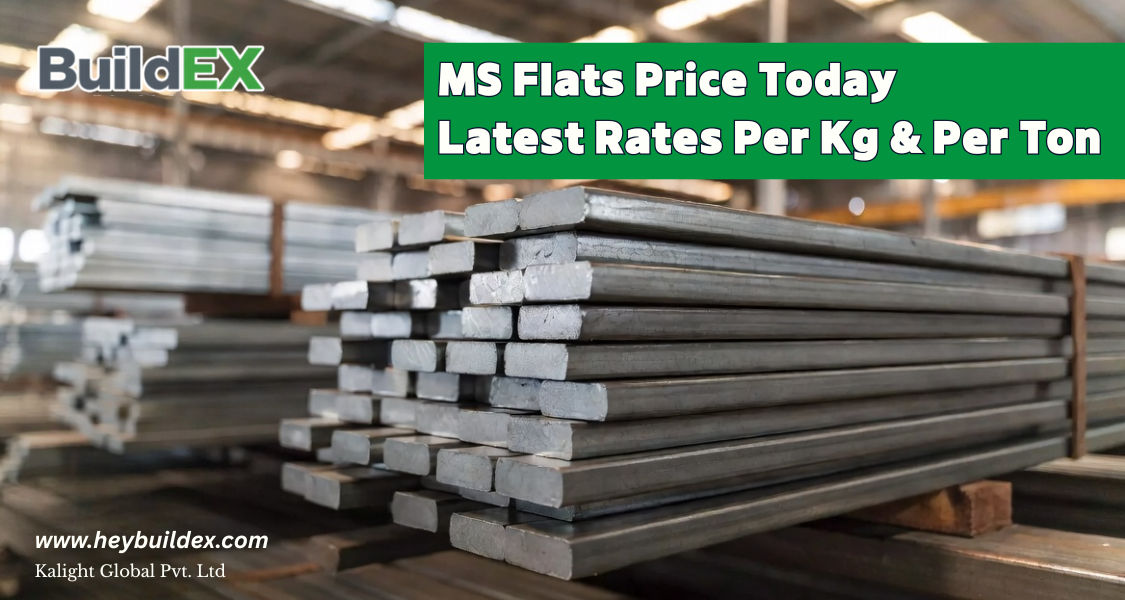
MS flats, also known as mild steel flats or steel flats, are flat rectangular bars made from mild steel — one of the most widely used grades of steel in the construction and fabrication industry. Available in various widths and thicknesses, they provide excellent strength and versatility for countless applications.
From door frames and window grills to heavy structural components and industrial machinery, mild steel flats are a backbone material across building and manufacturing sectors. Their easy weldability, machinability, and cost-effectiveness make them a top choice for builders, contractors, and fabricators across India.
Tracking the MS flats price today is critically important for project planning and budgeting. Steel prices can shift weekly based on global raw material costs, government policies, and regional demand. Whether you are a small fabricator or a large contractor, knowing the current rate per kg and per ton helps you avoid overpaying and make smarter procurement decisions.
MS Flats Price Today – Per Kg & Per Ton
Below are the approximate MS flats prices in India as of March 2026. These rates are indicative and vary based on size, thickness, grade, and supplier location.
Category
Price Range (Per Kg)
Price Range (Per Ton)
Standard MS Flats
₹52 – ₹58
₹52,000 – ₹58,000
Heavy / Industrial Flats
₹55 – ₹62
₹55,000 – ₹62,000
Premium / ISI Marked
₹58 – ₹66
₹58,000 – ₹66,000
⚠ Price Disclaimer: The steel prices mentioned in this article are indicative market estimates provided for informational purposes only. Actual prices may vary based on supplier, quantity, location, and current market conditions. Always confirm the latest rates directly with your steel supplier before purchasing.
Price variations depend on:
Size & Thickness – Larger, heavier flats (e.g., 75x10 mm) cost more per unit than lighter ones.
Grade & Quality – ISI-certified or branded steel commands a premium over unbranded material.
Location – Transportation distance from steel plants affects final pricing.
Order Quantity – Bulk orders above 5 MT often receive negotiated discounts.
Current MS Flats Price Trends in 2026
Steel price trends in 2026 continue to reflect a market influenced by both domestic growth and global supply chain dynamics. Here is what the current landscape looks like:
Rising Infrastructure Demand: India's ongoing infrastructure push — including highways, metro rail, airports, and smart cities — is fuelling sustained demand for structural steel, including MS flats.
Fluctuating Raw Material Costs: Global iron ore and scrap steel prices remain volatile. Any shift in Chinese steel output or global logistics costs ripples quickly into Indian markets.
Urban Construction Boom: Rapid urbanisation in Tier 1 and Tier 2 cities is driving consistent demand for mild steel flats used in residential and commercial construction.
Government Infra Projects: Central and state government spending on infrastructure continues to be a key demand catalyst, especially in Andhra Pradesh and Telangana.
Overall, construction material prices — including MS flats — are expected to remain firm through 2026, with occasional short-term fluctuations based on freight costs and seasonal demand.
Factors Affecting MS Flats Price
Several key factors determine what you pay for MS flats on any given day:
Raw Material Cost (Iron Ore & Scrap): Steel is derived from iron ore or recycled scrap. Price spikes in either input directly increase MS flat bar prices. Global iron ore mining disruptions or scrap shortages can push rates higher almost overnight.
Supply & Demand Balance: When construction activity surges — especially in peak seasons (October to March) — demand spikes and so do steel price trends. During monsoon months, demand eases and prices may soften slightly.
Transportation & Logistics Cost: Steel is heavy. Fuel prices and freight availability directly impact the cost of moving MS flats from mills to distribution hubs, especially to cities farther from production zones.
Government Policies & Import Duties: Anti-dumping duties, GST revisions, and export incentives all influence domestic steel pricing. Changes in government steel policy can impact construction material prices overnight.
Fuel Prices: Rising diesel prices directly increase logistics costs and, consequently, the delivered price of steel flats.
Currency Exchange Rates: Since India imports some steel and raw materials, rupee depreciation can push steel price trends upward.
City-Wise MS Flats Price Comparison
MS flats price in Hyderabad and MS flats price in Visakhapatnam can differ based on proximity to steel plants, local demand, and logistics. Here is a quick comparison:
City
Approx. Price/Kg
Approx. Price/Ton
Key Demand Drivers
Hyderabad
₹54 – ₹60
₹54,000 – ₹60,000
Urban construction, metro, infra projects
Visakhapatnam
₹53 – ₹59
₹53,000 – ₹59,000
Port, industrial zones, coastal projects
⚠ Price Disclaimer: The steel prices mentioned in this article are indicative market estimates provided for informational purposes only. Actual prices may vary based on supplier, quantity, location, and current market conditions. Always confirm the latest rates directly with your steel supplier before purchasing.
📍 MS Flats Price in Hyderabad
Hyderabad is one of India's fastest-growing urban centres, driving robust demand for MS flats across residential high-rises, commercial complexes, metro rail extensions, and road infrastructure. Steel suppliers in Hyderabad typically stock a wide range of MS flat sizes to meet diverse fabrication and construction needs. The city's strong connectivity to national steel plants keeps supply relatively stable, though prices do fluctuate with seasonal construction peaks.
📍 MS Flats Price in Visakhapatnam
Visakhapatnam (Vizag) is home to major steel plants and a thriving port economy, making it a significant steel distribution hub. MS flats price in Visakhapatnam tends to be slightly competitive due to proximity to manufacturing. Steel suppliers in Visakhapatnam serve both coastal construction projects and heavy industrial clients, including shipbuilding, marine infrastructure, and petrochemical facilities.
Standard Sizes & Applications of MS Flats
MS flats are available in a wide range of sizes to suit different project requirements. Below is a quick reference for common flat steel bar sizes and their typical uses:
Size (mm)
Thickness
Common Uses
20 x 3
Light
Fabrication, light frameworks
25 x 5
Medium
Gates, grills, frames
40 x 5
Medium
Machinery parts, platforms
50 x 6
Heavy
Structural support, bridges
75 x 10
Heavy
Industrial use, heavy engineering
100 x 12
Extra Heavy
Heavy infrastructure, foundations
MS flats are used extensively across:
Construction: Lintels, door and window frames, staircase stringers, handrails.
Fabrication: Machinery guards, conveyor frames, brackets, and supports.
Industrial: Platforms, structural bases, ship components, and heavy engineering.
Whether you are procuring MS flats for a small fabrication job or a large infrastructure project, these tips will help you buy smarter:
Check Quality & Certification: Always ask for ISI-marked or mill-certified MS flats. Quality steel ensures proper strength and weldability, reducing rework costs on-site.
Verify Weight Accurately: MS flats are sold by weight (kg or ton). Insist on verified weighbridge or calibrated scale measurements. Underweight supply is a common issue with unverified building material suppliers.
Compare Prices Across Suppliers: Don't settle for the first quote. Contact 2-3 steel suppliers near you to compare rates, especially for large orders. Even a ₹1-2/kg difference adds up significantly on multi-ton purchases.
Buy in Bulk When Prices Are Stable: If project timelines allow, lock in prices during periods of stability or slight dip. Purchasing in bulk also typically unlocks better per-ton rates.
Choose Local Suppliers for Better Logistics: Sourcing from a trusted building material supplier closer to your project site reduces transportation costs and delivery time.
Ask for a Written Quote with GST Breakup: Ensure pricing is transparent, with GST (18% for steel products) clearly mentioned to avoid billing surprises.
Common Mistakes to Avoid When Buying MS Flats
Buying Low-Quality or Unbranded Steel: Cheap, non-certified steel can fail under load, creating serious safety risks and costly rework. Always prioritise quality over short-term savings.
Ignoring Weight Accuracy: Some unscrupulous suppliers supply underweight material. Always verify net weight at your end or through a trusted third party.
Not Comparing Multiple Suppliers: Relying on a single quote can cost you significantly more. Market rates vary, and comparison is essential — especially for orders above 5 MT.
Not Checking Delivery Timelines: Delayed steel delivery can stall your entire project. Confirm delivery dates and penalties for delays upfront.
Overlooking Grade Specifications: MS flats come in different grades (e.g., IS 2062). Using the wrong grade for a structural application can compromise safety. Always specify the exact grade needed.
Why Choosing a Trusted Steel Supplier Matters
When buying MS flats, the supplier you choose matters as much as the price you pay. A reliable steel supplier near you brings multiple benefits:
Consistent Quality: Trusted suppliers source from reputable mills and maintain quality standards, ensuring every batch meets specifications.
Accurate Weight: Verified suppliers use calibrated weighing equipment, so you get exactly what you pay for — no short supply.
Transparent Pricing: Reputed building material suppliers provide clear, GST-inclusive quotes with no hidden charges.
On-Time Delivery: Reliable logistics and delivery scheduling prevent project delays, especially for large or phased orders.
After-Sales Support: Established suppliers help with returns, replacements, or custom cutting services that smaller dealers may not offer.
Platforms like Buildex connect verified steel suppliers in Hyderabad, Visakhapatnam, and across Andhra Pradesh and Telangana — helping buyers find the right supplier quickly, compare live prices, and place orders with confidence.
🔗 Ready to buy? Visit Buildex to compare the latest MS flats prices and connect with verified steel suppliers in Hyderabad, Visakhapatnam, and across Andhra Pradesh today!
❓ Frequently Asked Questions
Q1. What is the price of MS flats per kg today?
As of March 2026, the indicative MS flats price per kg ranges from approximately ₹52 to ₹66, depending on size, grade, and supplier location. Always confirm the latest rates directly with your local steel supplier or through platforms like Buildex.
Q2. How is the MS flats price per ton calculated?
The MS flats price per ton is simply the per-kg rate multiplied by 1,000. For example, if the rate is ₹55/kg, then 1 MT (metric ton) = 1,000 kg × ₹55 = ₹55,000. Always confirm whether quotes are in metric tons (MT) or short tons.
Q3. What are the standard sizes of MS flats?
MS flats are available in sizes ranging from 20x3 mm (light) to 100x12 mm (extra heavy) and beyond. Common sizes include 25x5, 40x5, 50x6, and 75x10 mm. The right size depends on your specific application — from light fabrication to heavy structural use.
Q4. Why do steel prices change so frequently?
Steel price trends are driven by global iron ore and scrap costs, fuel prices, freight rates, currency exchange, and domestic demand patterns. Infrastructure projects, government policies, and seasonal construction activity also cause regular fluctuations in construction material prices.
Q5. Where can I find reliable steel suppliers near me?
You can find verified steel suppliers in Hyderabad, Visakhapatnam, and across Andhra Pradesh and Telangana on Buildex — India's trusted platform for steel and construction material procurement. Compare prices, check reviews, and place orders with confidence.
Q6. What are MS flats used for?
MS flats (mild steel flats / flat bar steel) are used in a wide range of applications including door and window frames, staircase railings, structural supports, machinery guards, conveyor systems, industrial platforms, agricultural fencing, and bridge components. Their versatility makes them a go-to material across construction, fabrication, and heavy engineering sectors.